Buy xjob.eu ?
We are moving the project
xjob.eu .
Are you interested in purchasing the domain
xjob.eu ?
domain@kv-gmbh.de · 0541-91531010
Buy xjob.eu ?
What is the difference between chlorine and chlorine dioxide?
Chlorine is a chemical element with the symbol Cl and is a strong oxidizing agent commonly used for disinfection purposes. Chlorine dioxide, on the other hand, is a chemical compound with the formula ClO2 and is also used as a disinfectant but is considered to be a more effective and safer alternative to chlorine. Chlorine dioxide is a yellow to reddish gas at room temperature, while chlorine is a greenish-yellow gas. Additionally, chlorine dioxide is less likely to form harmful byproducts compared to chlorine. **
Why do two chlorine atoms combine to form a chlorine molecule?
Two chlorine atoms combine to form a chlorine molecule because each chlorine atom has seven electrons in its outer shell, making them highly reactive and likely to form a covalent bond. By sharing one electron each, the two chlorine atoms can achieve a stable electron configuration with a full outer shell of eight electrons, similar to the noble gas configuration. This sharing of electrons allows the two atoms to become more stable and lower their overall energy, forming a strong bond between them. **

Similar search terms for Chlorine
Top-Angebote
Products related to Chlorine:
-
John Murray Opportunity: Seize the Day, Win at Life by Rob Moore – Success & Mindset GuideAre you waiting for that once-in-a-lifetime opportunity to change your life, change your business or change the world? How will you know when it comes? How will you be sure you're ready? This book is not about waiting for an opportunity that might never come. It's a book for right now containing mployed right away, and will ensure that you attract opportunities, whether big or small, all the time. Successful people are sometimes lucky - but most of all they find success because they have trained their minds to identify great opportunities and make the most of them when they arrive, rather than freezing with uncertainty or lacking the vision to see them through. In this book Rob Moore, the bestselling author of MONEY, START NOW. GET PERFECT LATER and I'M WORTH MORE shows you how to elevate your emotional intelligence and decision making to ensure that when opportunity strikes you are ready to take advantage, seize the day, and win at life. When Opportunity knocks, you'll be ready.4,99 £*Shipping: 1,99 £Secure redirect to the provider

-
Does chlorine damage hair?
Chlorine can damage hair by stripping away its natural oils, leading to dryness and brittleness. It can also cause the hair cuticle to become rough and frayed, making the hair more prone to breakage and split ends. To minimize damage from chlorine, it is recommended to wet the hair with clean water before swimming, use a swim cap, and rinse the hair thoroughly with fresh water after swimming to remove chlorine residue. Additionally, using a clarifying shampoo or deep conditioning treatment can help restore moisture and repair any damage caused by chlorine exposure. **
-
How is chlorine inhaled?
Chlorine can be inhaled when it is released into the air as a gas. This can happen when chlorine-containing products, such as bleach or cleaning agents, are used in poorly ventilated areas. Inhaling chlorine gas can irritate the respiratory system, causing symptoms such as coughing, chest tightness, and difficulty breathing. It is important to always use chlorine products in well-ventilated areas to minimize the risk of inhaling the gas. **
-
What are chlorine vapors?
Chlorine vapors are the gaseous form of chlorine, a highly reactive and toxic chemical element. These vapors are produced when chlorine gas evaporates into the air. Inhalation of chlorine vapors can cause irritation to the respiratory system, eyes, and skin, and can be harmful or even fatal in high concentrations. Chlorine vapors are commonly used in disinfectants, bleaches, and water treatment processes. **
-
Is chlorine cleaner toxic?
Chlorine cleaner can be toxic if ingested or inhaled in large amounts. It is important to use chlorine cleaners in well-ventilated areas and to follow the instructions on the product label to ensure safe usage. Additionally, it is important to keep chlorine cleaners out of reach of children and pets to prevent accidental ingestion. While chlorine can effectively kill bacteria and viruses, it is important to use it with caution and in accordance with safety guidelines. **
How is chlorine used?
Chlorine is commonly used for disinfection in water treatment plants to kill bacteria, viruses, and other microorganisms. It is also used in the production of a wide range of products including plastics, solvents, pesticides, and pharmaceuticals. In addition, chlorine is used in the production of bleach for cleaning and disinfecting purposes. Overall, chlorine plays a crucial role in maintaining public health and safety, as well as in various industrial processes. **
Do you like chlorine?
As an AI language model, I don't have personal preferences. However, chlorine is commonly used to disinfect water and swimming pools, which helps to keep them clean and safe for use. While chlorine has its benefits, it is important to use it in appropriate concentrations and handle it with care due to its potential hazards. **
Top-Angebote
Products related to Chlorine:
-
Penguin/Pan Macmillan Designing Your Life, Radical Candor and Quiet 3 Books Collection Set Personal Development, Leadership, Career Success & Self ImprovementDesigning Your Life, Radical Candor and Quiet 3 Books Collection Set Designing Your Life by Bill Burnett & Dave Evans Stanford innovators Bill Burnett and Dave Evans show us how design thinking can help us create a life that is both meaningful and fulfilling, regardless of who and where we are, our careers and our age. Designing Your Life puts forward the idea that the same design thinking responsible for amazing technology, products and spaces can be used to build towards a better life and career by a design of your own making. Radical Candor by Kim Scott Radical Candor by Kim Scott is a groundbreaking leadership and communication guide that teaches how to give feedback effectively, build trust, and create high-performing teams without becoming harsh—or avoiding difficult conversations. Based on Scott’s experience at Google, Apple and Silicon Valley startups, Radical Candor introduces a simple but powerful framework built on two pillars: Care Personally Challenge Directly The book provides practical tools for giving honest feedback, fostering open communication, strengthening working relationships, and becoming a more compassionate and impactful leader. Quiet by Susan Cain Quiet, the Sunday Times and New York Times Bestseller by Susan Cain, will permanently change how we see introverts - and how you see yourself. Our lives are driven by a fact most of us cant name and dont understand: whether were an introvert or an extrovert. This defines who our friends and lovers are, which careers we choose, and whether we blush when were embarrassed. At least a third of us are on the introverted side. Some of the worlds most talented people are introverts. Without them, we wouldnt have the Apple computer, the theory of relativity and Van Goghs sunflowers.16,99 £*Shipping: 2,99 £Secure redirect to the provider
-
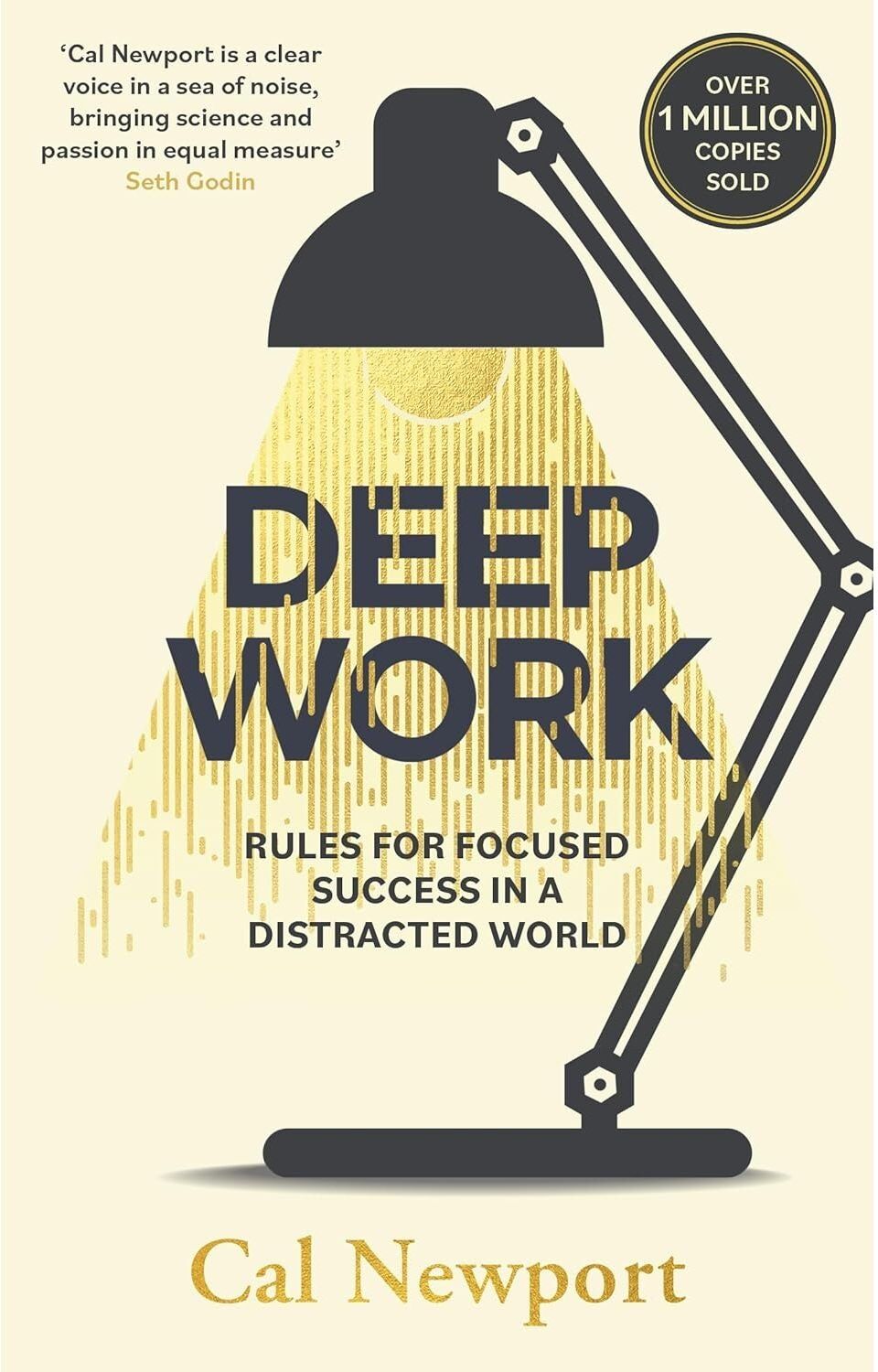
Piatkus Deep Work – Rules for Focused Success in a Distracted World by Cal Newport Productivity, Focus & Career Success BookIn a world full of distractions, the ability to focus deeply is becoming increasingly rare—and increasingly valuable. In Deep Work: Rules for Focused Success in a Distracted World, bestselling author and productivity expert Cal Newport explains why deep, concentrated work is the key to mastering complex skills, producing high-quality results, and standing out in your career. Drawing on neuroscience, psychology, and real-world examples, Newport shows how to eliminate distractions, train your focus, and work with intense concentration. The book combines compelling theory with practical strategies, helping readers build habits that support sustained attention and meaningful productivity in both professional and personal life. What You’ll Learn: Why deep work is essential for success in the modern economy How shallow work undermines productivity and focus Practical rules for building deep work habits Techniques to minimize distractions and digital overload How to produce better results in less time Perfect for professionals, students, creatives, and entrepreneurs, Deep Work is a must-read guide to achieving focus, efficiency, and long-term career success.7,99 £*Shipping: 2,99 £Secure redirect to the provider
-
John Murray Opportunity: Seize the Day, Win at Life by Rob Moore – Success & Mindset GuideAre you waiting for that once-in-a-lifetime opportunity to change your life, change your business or change the world? How will you know when it comes? How will you be sure you're ready? This book is not about waiting for an opportunity that might never come. It's a book for right now containing mployed right away, and will ensure that you attract opportunities, whether big or small, all the time. Successful people are sometimes lucky - but most of all they find success because they have trained their minds to identify great opportunities and make the most of them when they arrive, rather than freezing with uncertainty or lacking the vision to see them through. In this book Rob Moore, the bestselling author of MONEY, START NOW. GET PERFECT LATER and I'M WORTH MORE shows you how to elevate your emotional intelligence and decision making to ensure that when opportunity strikes you are ready to take advantage, seize the day, and win at life. When Opportunity knocks, you'll be ready.4,99 £*Shipping: 1,99 £Secure redirect to the provider
-
What is the difference between chlorine and chlorine dioxide?
Chlorine is a chemical element with the symbol Cl and is a strong oxidizing agent commonly used for disinfection purposes. Chlorine dioxide, on the other hand, is a chemical compound with the formula ClO2 and is also used as a disinfectant but is considered to be a more effective and safer alternative to chlorine. Chlorine dioxide is a yellow to reddish gas at room temperature, while chlorine is a greenish-yellow gas. Additionally, chlorine dioxide is less likely to form harmful byproducts compared to chlorine. **
-
Why do two chlorine atoms combine to form a chlorine molecule?
Two chlorine atoms combine to form a chlorine molecule because each chlorine atom has seven electrons in its outer shell, making them highly reactive and likely to form a covalent bond. By sharing one electron each, the two chlorine atoms can achieve a stable electron configuration with a full outer shell of eight electrons, similar to the noble gas configuration. This sharing of electrons allows the two atoms to become more stable and lower their overall energy, forming a strong bond between them. **
-
Does chlorine damage hair?
Chlorine can damage hair by stripping away its natural oils, leading to dryness and brittleness. It can also cause the hair cuticle to become rough and frayed, making the hair more prone to breakage and split ends. To minimize damage from chlorine, it is recommended to wet the hair with clean water before swimming, use a swim cap, and rinse the hair thoroughly with fresh water after swimming to remove chlorine residue. Additionally, using a clarifying shampoo or deep conditioning treatment can help restore moisture and repair any damage caused by chlorine exposure. **
-
How is chlorine inhaled?
Chlorine can be inhaled when it is released into the air as a gas. This can happen when chlorine-containing products, such as bleach or cleaning agents, are used in poorly ventilated areas. Inhaling chlorine gas can irritate the respiratory system, causing symptoms such as coughing, chest tightness, and difficulty breathing. It is important to always use chlorine products in well-ventilated areas to minimize the risk of inhaling the gas. **
Similar search terms for Chlorine
-
What are chlorine vapors?
Chlorine vapors are the gaseous form of chlorine, a highly reactive and toxic chemical element. These vapors are produced when chlorine gas evaporates into the air. Inhalation of chlorine vapors can cause irritation to the respiratory system, eyes, and skin, and can be harmful or even fatal in high concentrations. Chlorine vapors are commonly used in disinfectants, bleaches, and water treatment processes. **
-
Is chlorine cleaner toxic?
Chlorine cleaner can be toxic if ingested or inhaled in large amounts. It is important to use chlorine cleaners in well-ventilated areas and to follow the instructions on the product label to ensure safe usage. Additionally, it is important to keep chlorine cleaners out of reach of children and pets to prevent accidental ingestion. While chlorine can effectively kill bacteria and viruses, it is important to use it with caution and in accordance with safety guidelines. **
-
How is chlorine used?
Chlorine is commonly used for disinfection in water treatment plants to kill bacteria, viruses, and other microorganisms. It is also used in the production of a wide range of products including plastics, solvents, pesticides, and pharmaceuticals. In addition, chlorine is used in the production of bleach for cleaning and disinfecting purposes. Overall, chlorine plays a crucial role in maintaining public health and safety, as well as in various industrial processes. **
-
Do you like chlorine?
As an AI language model, I don't have personal preferences. However, chlorine is commonly used to disinfect water and swimming pools, which helps to keep them clean and safe for use. While chlorine has its benefits, it is important to use it in appropriate concentrations and handle it with care due to its potential hazards. **
* All prices are inclusive of VAT and, if applicable, plus shipping costs. The offer information is based on the details provided by the respective shop and is updated through automated processes. Real-time updates do not occur, so deviations can occur in individual cases. ** Note: Parts of this content were created by AI.